
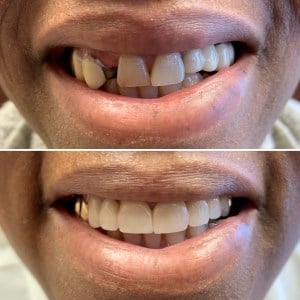
Understanding Tooth Replacement with Bridges
Missing teeth create significant functional and aesthetic problems that worsen over time if left untreated. Dental bridges offer a proven, effective solution for replacing one or more consecutive missing teeth by literally “bridging” the gap. Understanding when bridges are appropriate and how they compare to other replacement options helps you make informed decisions about your oral health.
Why Replace Missing Teeth?
Functional Problems Missing teeth significantly impair: Chewing ability reducing nutritional intake and forcing overuse of remaining teeth, Speech affecting pronunciation of certain sounds, Bite distribution causing excessive forces on remaining teeth leading to accelerated wear and fracture, and TMJ problems from altered bite mechanics.
Oral Health Consequences Leaving gaps untreated causes: Adjacent teeth drifting into empty spaces creating misalignment, Opposing teeth over-erupting disrupting bite balance, Bone loss in the area without tooth roots stimulating bone, Increased cavity risk in shifted teeth that are harder to clean, and Gum disease in areas that become difficult to clean properly.
Aesthetic and Psychological Impact Visible gaps, especially in smile zone, affect: self-confidence and self-esteem, social interactions and relationships, professional opportunities, and overall quality of life.
What Are Dental Bridges?
A dental bridge is a fixed (non-removable) restoration that replaces one or more missing teeth by anchoring artificial teeth to adjacent natural teeth or dental implants. The bridge consists of: Pontics (artificial replacement teeth), and Abutments (crowns on anchor teeth or implants supporting the pontics).
Types of Dental Bridges
Traditional Fixed Bridge The most common type, traditional bridges use dental crowns on natural teeth adjacent to the gap to support artificial teeth in between. Advantages: strong, durable, permanent solution; natural appearance and function; proven track record spanning decades. Disadvantages: requires preparing (grinding down) healthy adjacent teeth for crowns; risk to healthy teeth if they later develop problems; doesn’t prevent bone loss under pontics.
Cantilever Bridge Used when teeth are present on only one side of the gap. The pontic is supported by one or more crowns on adjacent teeth on one side only. Less common due to engineering challenges—forces on one side can stress anchor teeth. Used occasionally for missing front teeth with specific positioning.
Maryland Bridge (Resin-Bonded Bridge) Conservative option using metal or ceramic framework bonded to backs of adjacent teeth with minimal tooth preparation. Advantages: preserves adjacent tooth structure (minimal grinding), less expensive than traditional bridges, relatively quick procedure. Disadvantages: not as strong as traditional bridges, limited to front teeth with light bite forces, may debond requiring recementation, not suitable for replacing molars.
Implant-Supported Bridge Bridges supported by dental implants rather than natural teeth. Often used when: multiple consecutive teeth are missing, no suitable natural teeth are available for support, or preserving adjacent healthy teeth is priority. Advantages: no impact on natural teeth, prevents bone loss where implants are placed, superior stability and longevity, strongest option available. Disadvantages: higher cost, requires surgery, longer treatment timeline (3-6 months).
Benefits of Dental Bridges:
- Restore ability to chew and speak properly
- Maintain facial shape and prevent sagging from missing teeth
- Distribute bite forces properly preventing excessive stress on remaining teeth
- Prevent adjacent teeth from drifting into empty spaces
- Permanent, fixed solution that doesn’t require removal
- Natural appearance matching your existing teeth
- Durable restoration lasting 10-15+ years with proper care
- More affordable than multiple individual implants
- Faster treatment than implants (2-3 weeks vs. 3-6 months)
