
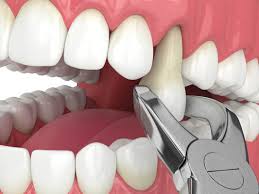
While modern dentistry focuses on preserving natural teeth whenever possible, tooth extraction is sometimes necessary for oral health.
Common Reasons for Tooth Extraction
Severe Tooth Decay When cavities destroy so much tooth structure that restoration becomes impossible, extraction prevents ongoing infection and pain. Teeth with decay extending deep below the gum line or involving most of the tooth structure cannot be restored with fillings or crowns.
Advanced Gum Disease (Periodontitis) Severe periodontal disease destroys the bone and soft tissue supporting teeth. When teeth lose adequate support and become excessively loose, extraction may be necessary. Attempting to save severely compromised teeth can allow infection to spread and damage adjacent teeth.
Fractured or Broken Teeth Teeth can fracture from: trauma or injury, biting hard objects, large fillings weakening tooth structure, or untreated cracks propagating over time. Fractures extending below the gum line or splitting teeth vertically cannot be repaired.
Impacted Teeth Teeth that cannot properly emerge through gums become impacted, most commonly wisdom teeth and canines. Impacted teeth cause: pain and swelling, infection, cyst formation, damage to adjacent teeth, and crowding.
Overcrowding Orthodontic treatment sometimes requires extracting teeth to create space for proper alignment. Strategic extractions allow remaining teeth to move into correct positions. This is common when jaws are too small to accommodate all teeth comfortably.
Failed Root Canal Treatment While root canal success rates exceed 95%, treatment occasionally fails due to: complex canal anatomy, persistent infection, cracks in tooth structure, or inadequate seal. When retreatment or apicoectomy cannot resolve the problem, extraction may be necessary.
Tooth Malposition Teeth positioned incorrectly that cannot be moved orthodontically and cause bite problems, trauma to soft tissues, or interfere with proper function may require extraction.
Baby Teeth That Don’t Fall Out Primary teeth that don’t naturally exfoliate when permanent teeth are ready to erupt may require extraction to allow proper permanent tooth eruption.
Infection Risk Patients undergoing chemotherapy, organ transplant, or with compromised immune systems may need questionable teeth extracted before treatment to prevent serious infections.
Types of Extractions
Simple Extraction Performed on fully erupted, visible teeth. The tooth is loosened using an elevator instrument, then removed with forceps. Requires only local anesthesia and typically heals quickly. Most routine extractions are simple extractions.
Surgical Extraction Required for teeth that: haven’t fully erupted, are broken at the gum line, have curved roots, or are impacted. Involves making a small incision in gum tissue, possibly removing bone around the tooth, and sometimes sectioning the tooth for removal in pieces. Performed under local anesthesia with sedation options available.
Our Extraction Services:
- Simple extractions for visible, accessible teeth
- Surgical extractions for impacted, broken, or difficult teeth
- Wisdom teeth removal (see separate section for details)
- Emergency same-day extractions available for severe pain or infection
- Multiple sedation options for anxious patients including oral sedation and IV sedation
- Immediate tooth replacement planning with implants, bridges, or dentures
- Comprehensive aftercare instructions and follow-up
- Socket preservation procedures to maintain bone for future implants


